

Independent concept study
Design explorationMemory Routing: keeping people oriented
An independent navigation concept exploring clearer route changes, progressive guidance and recovery when plans change.
Context
Independent navigation concept
Role
Independent product and UX exploration
Platform
Mobile navigation patterns
Timeline
Independent concept exploration
The approach at a glance
Memory Routing: keeping people oriented
Executive summary
An independent navigation concept exploring clearer route changes, progressive guidance and recovery when plans change.
Outcomes
Explored orientation, route explanations and recovery states.
Defined the questions a navigation prototype should answer in testing.
KPIs
The challenge
Navigation asks people to make decisions while their attention is already occupied. A route change can create uncertainty when the interface explains the new direction but leaves out why it changed. This independent concept explores how guidance could keep people oriented through those moments.
The design direction
Keep the next action prominent, provide a stable sense of progress and explain a route change in plain language. More detail should be available when useful without making every instruction compete for attention.
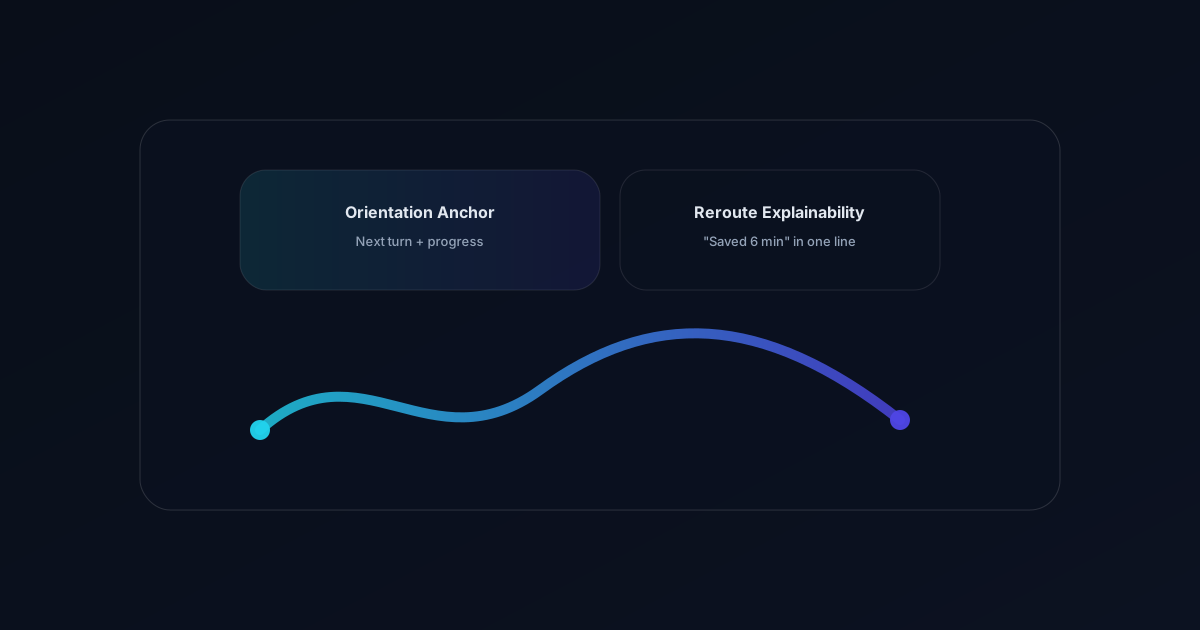
Design for the exception
Missed turns, weak location signals and interrupted connectivity are central to the experience. The proposed flow gives each state an understandable explanation and a clear recovery path. It avoids presenting uncertainty as a precise answer.
How I would validate it
Use a controlled prototype to review route comprehension and recovery after a change. Observe whether participants understand the next action and why it differs from the original plan. Completion time and error rates would require an actual study; this concept does not claim measured performance gains or a delivered navigation product.
Where the approach is useful
Orientation and recovery matter beyond maps. Multi-step onboarding, financial workflows and complex dashboards also need to tell people where they are, what changed and what they can do next.
Related thinking
Methods used
Have a similar product problem?