

Independent concept study
Design explorationHappy Eats: a clearer food-ordering journey
An independent UX concept exploring clearer discovery, transparent totals and a more understandable checkout.
Context
Happy Eats · concept study
Role
Independent product and UX exploration
Platform
Mobile-first web / app patterns
Timeline
Independent concept exploration
The approach at a glance

Happy Eats: a clearer food-ordering journey
Executive summary
An independent UX concept exploring clearer discovery, transparent totals and a more understandable checkout.
Outcomes
Prioritised decision cues from discovery through checkout.
Designed a validation plan for transparent totals and recovery states.
KPIs
The challenge
Ordering food is a time-sensitive decision. People need to understand the choices, delivery expectations and total cost before they commit. This independent concept explores how a mobile ordering journey could make those decisions easier.
The design direction
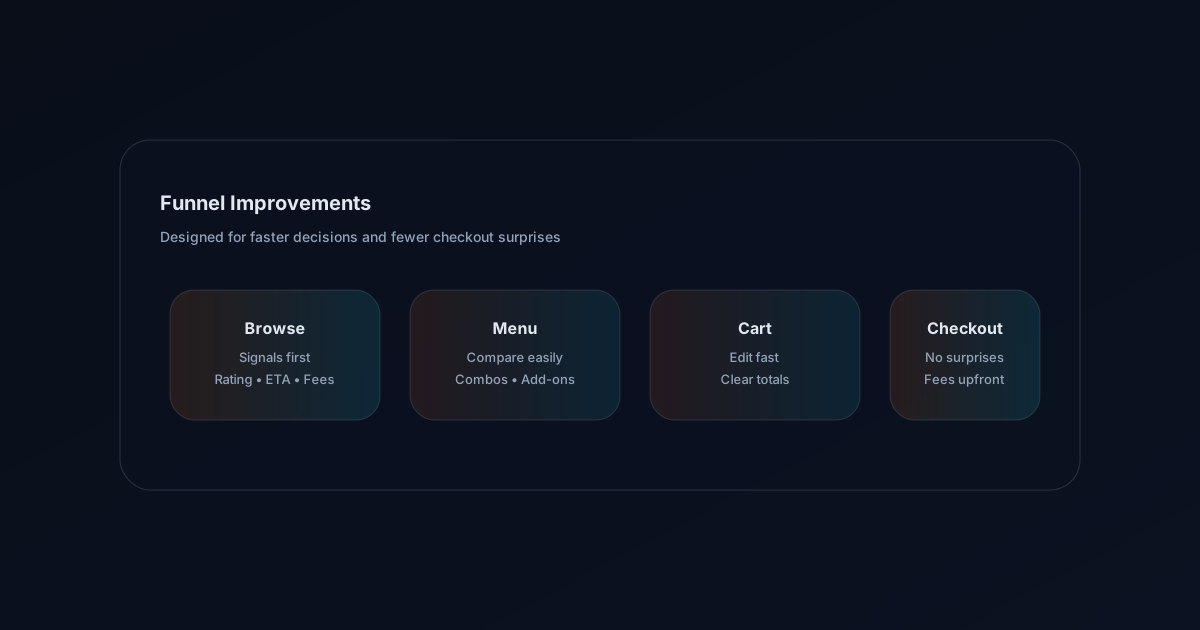
The proposed journey brings useful decision cues into view early: ratings, delivery estimates, dietary information and fees. Menu and cart views support comparison and editing, while checkout keeps the full total visible.
The tradeoffs
More information can improve confidence, but showing every detail at once creates another kind of friction. I would prioritise the cues needed for the current decision and reveal supporting detail when requested. Promotions should support the choice rather than obscure the primary action.
How I would validate it
Test whether people can find a suitable option, explain the full cost and recover from an unavailable item. Compare completion, hesitation and misunderstood information across the proposed flows. Any conversion result would need a defined baseline and an observed test; no percentage uplift is claimed for this concept.
Where the approach is useful
The same questions apply to other purchase journeys: what does the customer need to know now, which surprises can be removed, and how can the product help them recover when something changes?
Related thinking
Methods used
Have a similar product problem?